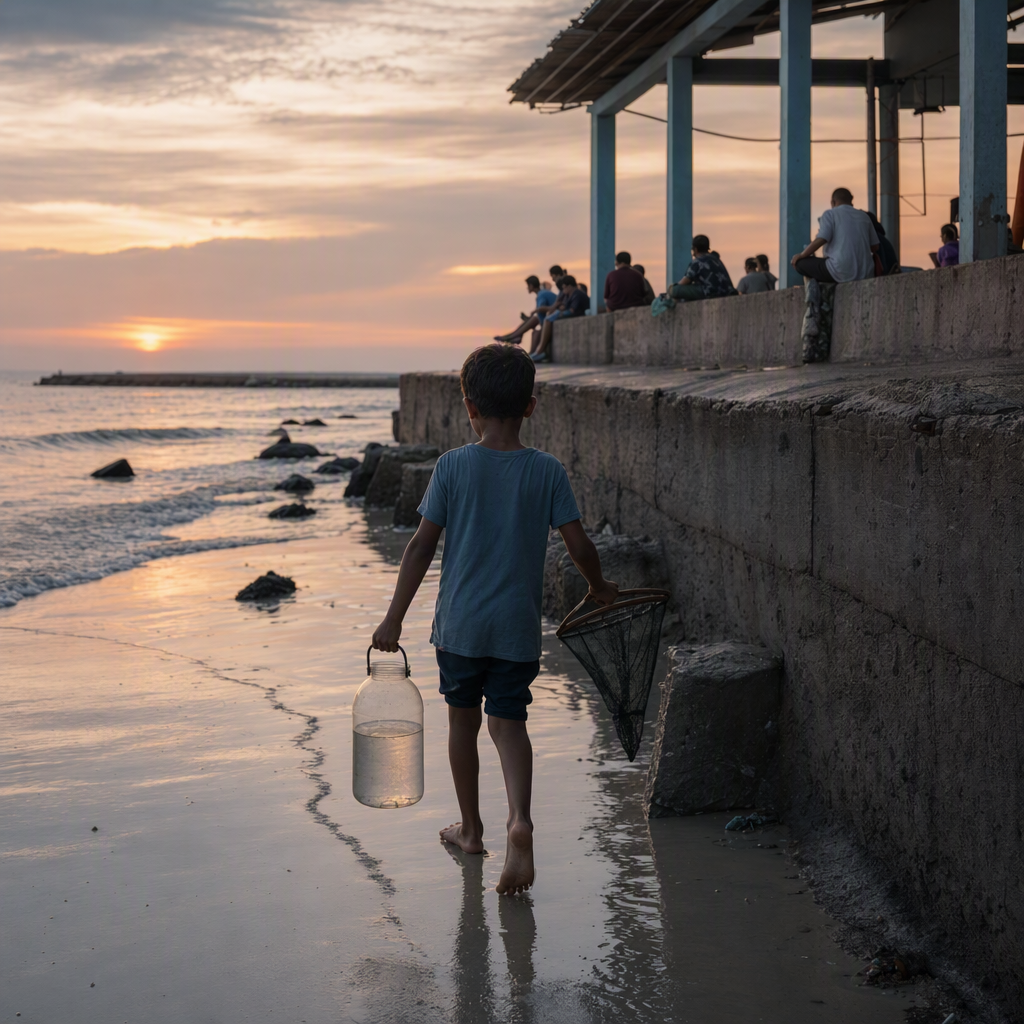
A commute measured in depth
Diel vertical migration is the regular movement of many plankton and fish toward surface waters after dusk and back to depth around dawn. Not every organism follows the same schedule. Light, food, predators, temperature and oxygen all shape when and how far an animal moves.
In the fictional Tidehouse observation room, an acoustic trace thickens as sunset fades. It suggests a layer in motion, not a species list. The team pairs that broad signal with careful sampling and direct observation.
“At night, the surface is not suddenly fuller. It becomes briefly accessible to a different neighbourhood.”
Nets reveal and distort
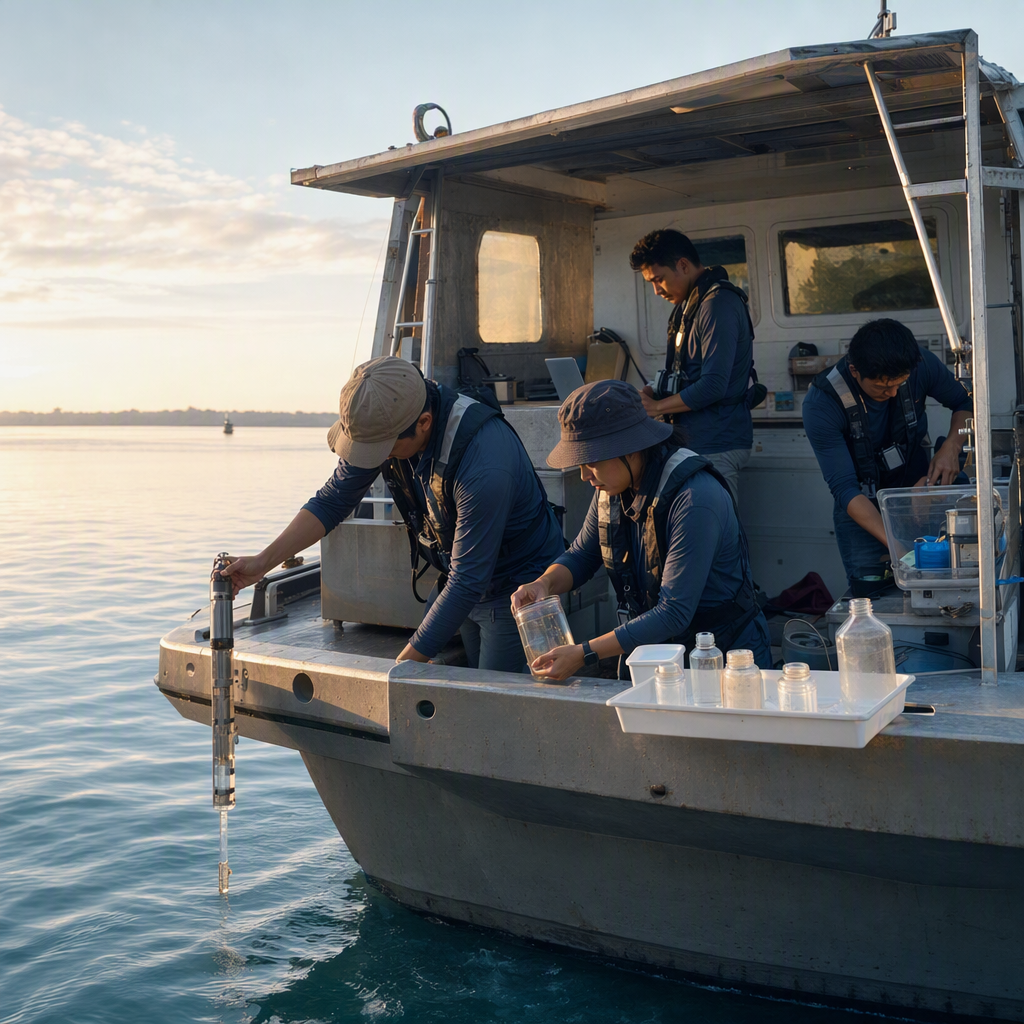
A plankton net filters a small volume of a very large sea. Mesh size determines what is retained, tow speed can damage delicate bodies, and mobile animals may avoid the gear. The catch is evidence of presence under specific conditions, never a complete census.
Samples are kept cool, labels are checked aloud, and ambiguous organisms remain unidentified rather than being forced into a confident name.
Why the movement matters
Migrators feed near the surface and respire, excrete or become food deeper down. Across huge populations, these movements help move carbon and nutrients through the water column. Ecologists study that “biological pump” alongside physical mixing and sinking particles.
The ecological importance is real. Its magnitude in a particular place cannot be inferred from one dramatic night or one bright net haul.
Light changes the encounter
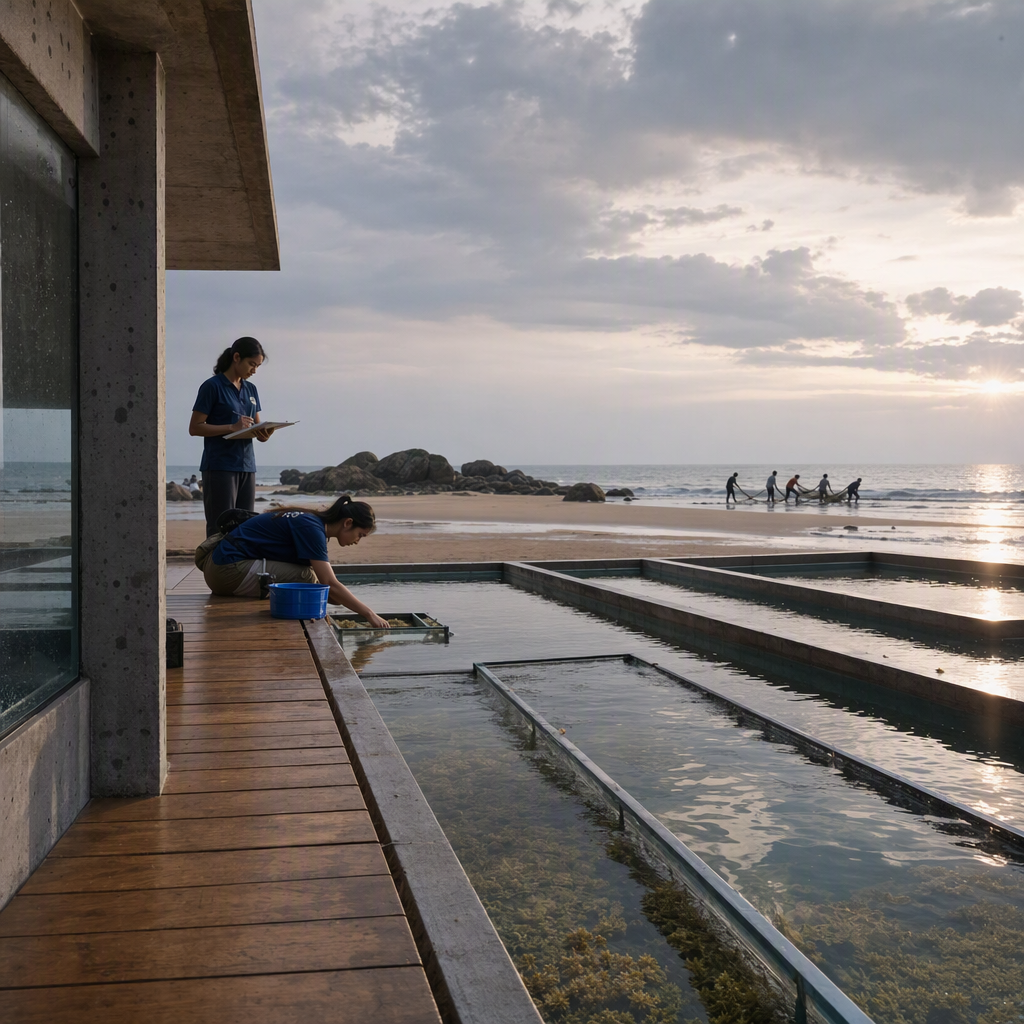
Artificial light can attract, repel or disorient marine life. Red working lamps and shielded deck lights may reduce some disturbance, but do not make an observation neutral. Moon phase, cloud and the vessel itself remain part of the conditions.
The imagined team records those influences beside every sample. Observation begins by admitting the observer is present.