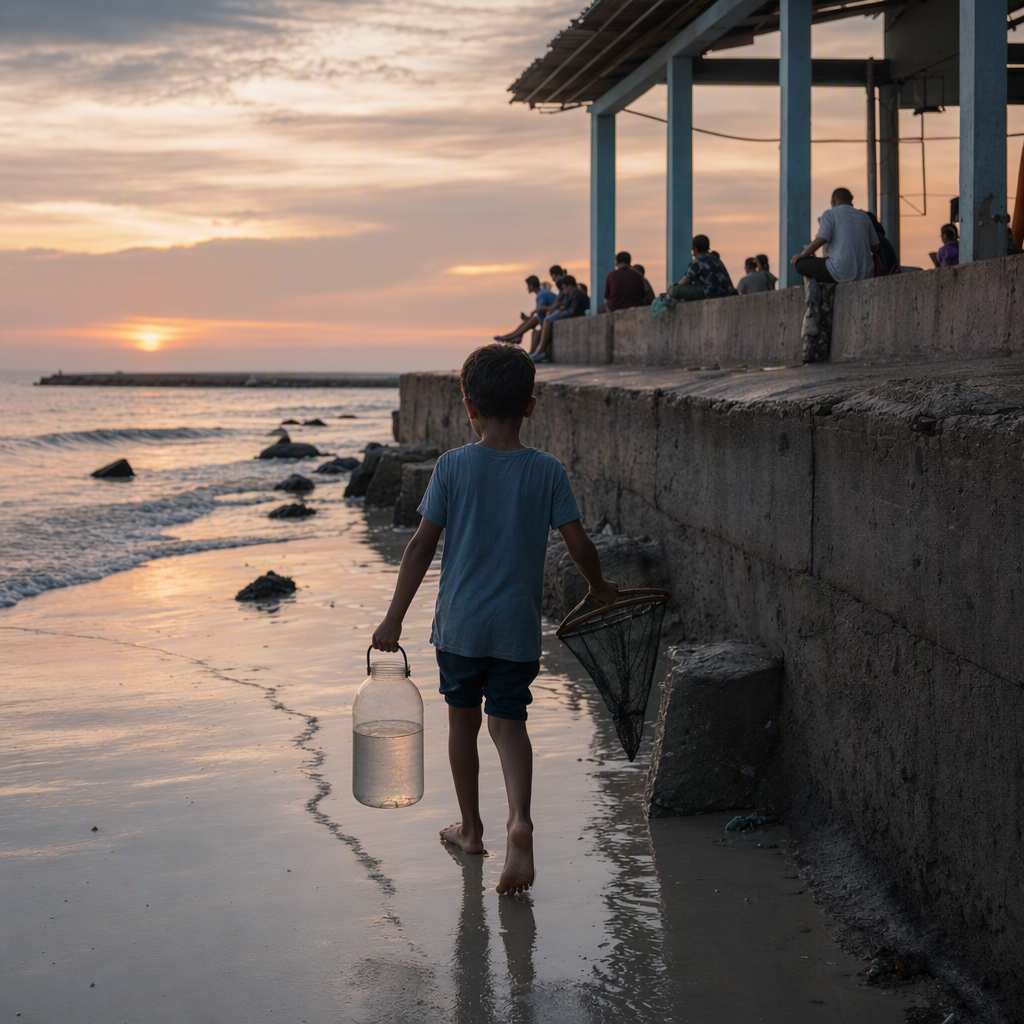
Before the weather turns
The fictional Tidehouse team deploys only while conditions remain within a conservative safety plan. The hydrophone is secured from shore in sheltered water. No recording justifies launching into deteriorating weather, and remote instruments are left in place if recovery becomes unsafe.
Time checks link the audio to rainfall, wind and tide observations. Without that context, a compelling roar remains difficult to explain.
“Sound makes a storm feel close. Method keeps the story honest.”
What a hydrophone hears
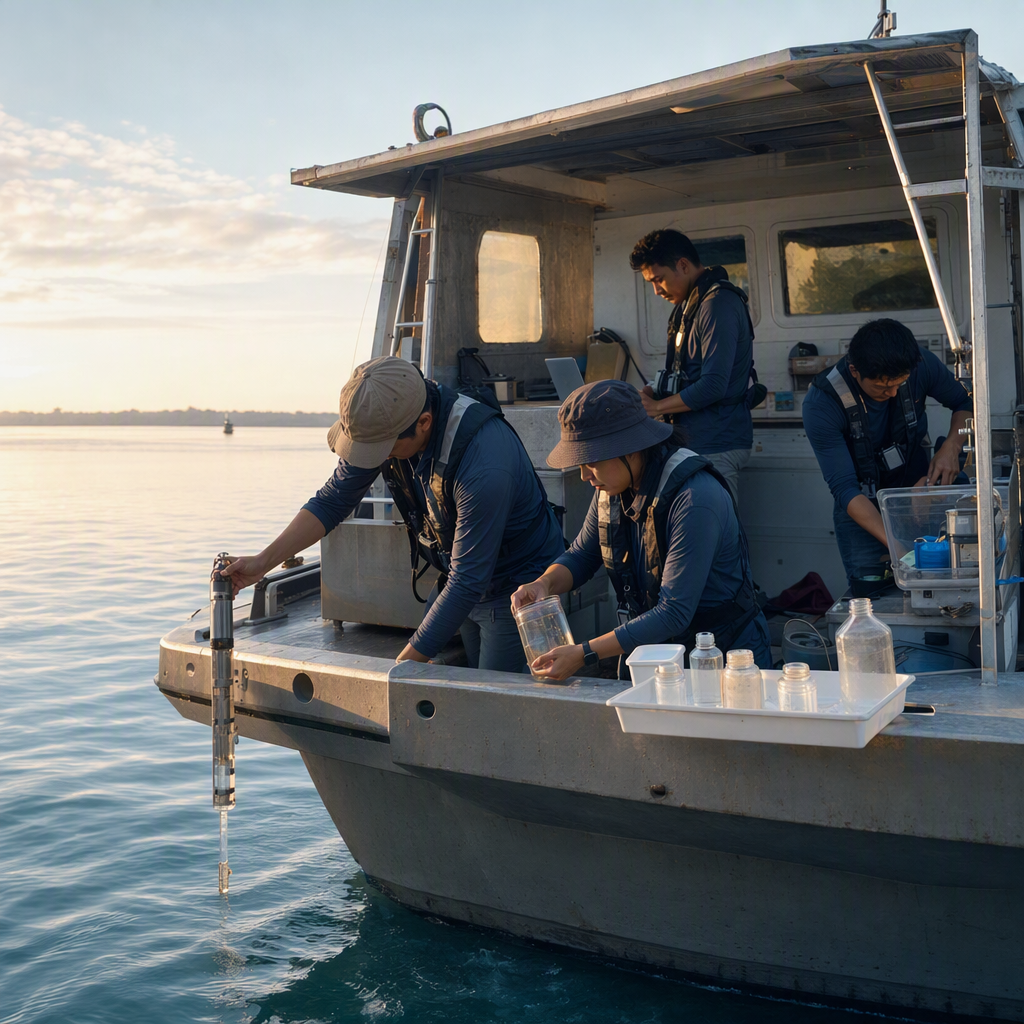
A hydrophone converts underwater pressure changes into an electrical signal. Rain can create characteristic broadband sound as drops strike the surface and trap bubbles. Breaking waves, vessel engines, snapping animals and cable movement may overlap in the same recording.
Sensitivity, sample rate, depth and distance from boundaries shape the result. Even the cable rubbing against a support can masquerade as environmental sound.
From spectrogram to interpretation
A spectrogram displays energy across frequency and time. Patterns help researchers compare events, but colours on a screen are not causes. Interpretation is strengthened by calibration, repeated deployments and independent weather data.
In our imagined recording, a high-frequency wash rises before the low pulse of larger waves. It is a prompt to investigate, not evidence for a universal storm signature.
Listening without extraction
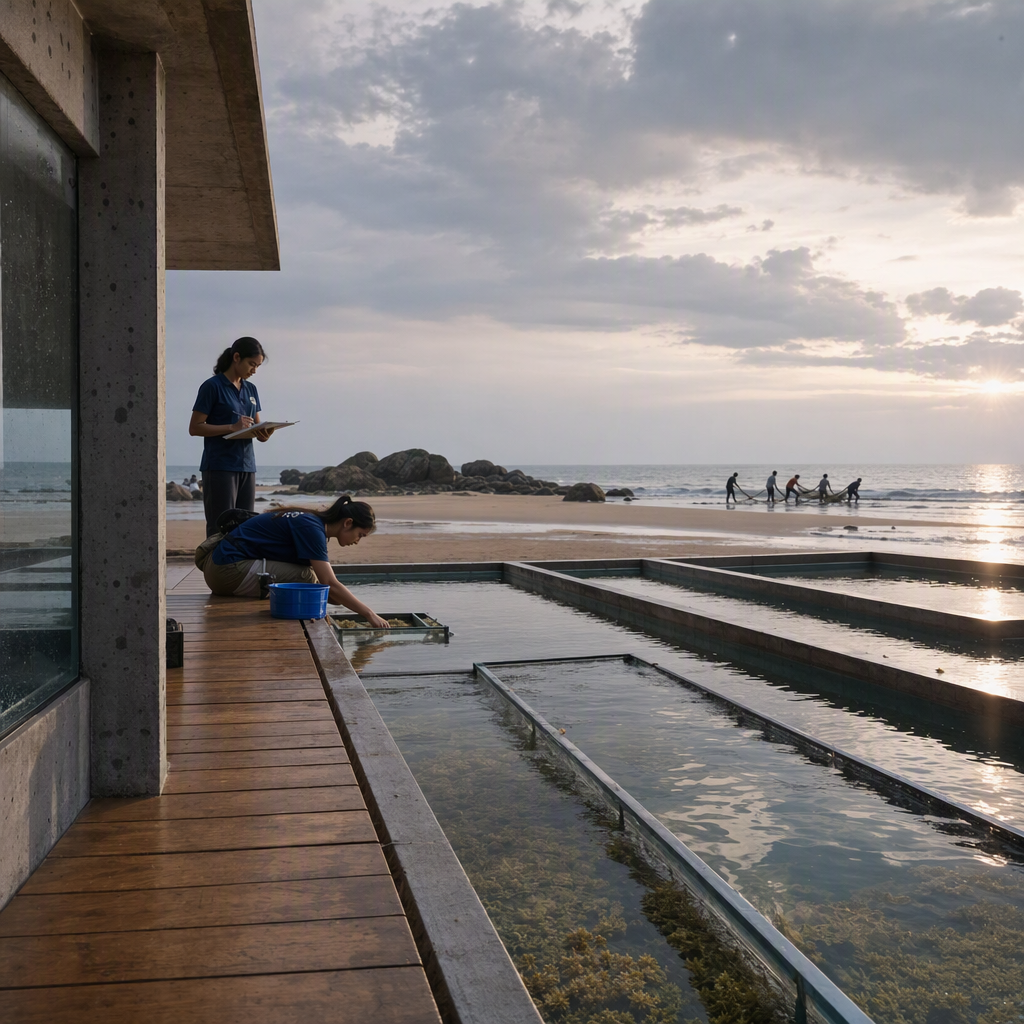
Passive acoustics can observe for long periods with less disturbance than some active methods. It still carries responsibilities: equipment can entangle wildlife, recordings may capture vessels or human activity, and deployment sites have communities and users.
Good listening includes permission, safe placement, data stewardship and a plan to remove every piece of equipment.