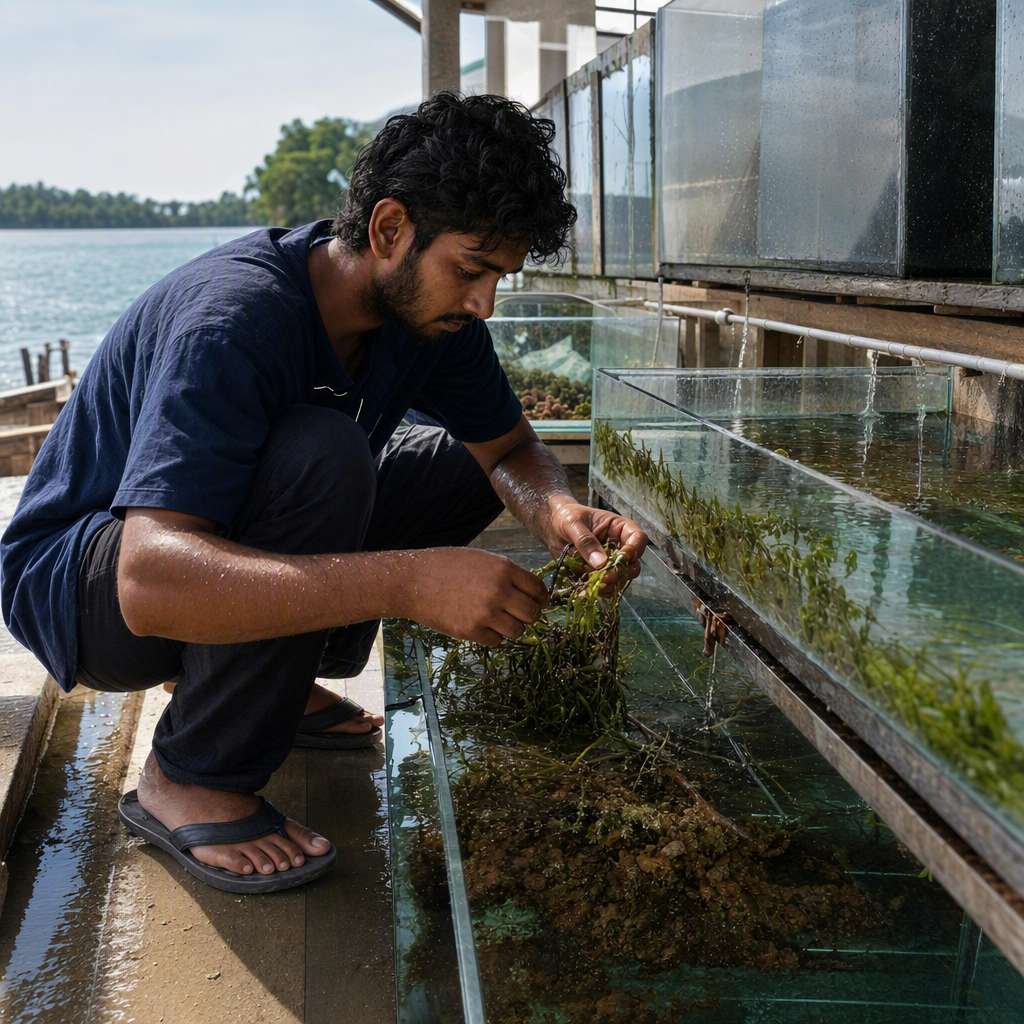
At the creek before sunrise
In this imagined field note, the Tidehouse skiff reaches a sheltered creek while the tide is still falling. The team records time, salinity, weather and the position of each sampling point before touching the sediment. Those details are not atmosphere. They are part of what makes a measurement interpretable.
Mangroves can slow water and trap fine particles. Their roots and waterlogged soils may hold organic matter for long periods because oxygen is limited below the surface. This is one reason coastal wetlands are discussed as “blue carbon” ecosystems. It does not mean every mangrove stores carbon at the same rate, or that a single core can describe an entire forest.
“The darker layer catches the eye. The metadata tells us whether it can carry meaning.”
How a core becomes evidence
A clear tube is pressed vertically into the bed, capped and withdrawn with as little disturbance as possible. The recovered column is photographed, measured and divided into labelled intervals. In a real study, laboratory analyses might estimate organic carbon, grain size, density and age, each with its own assumptions and quality controls.
Our fictional notebook deliberately stops short of publishing invented measurements. Colour, smell and texture can guide questions, but they are not substitutes for calibrated analysis.
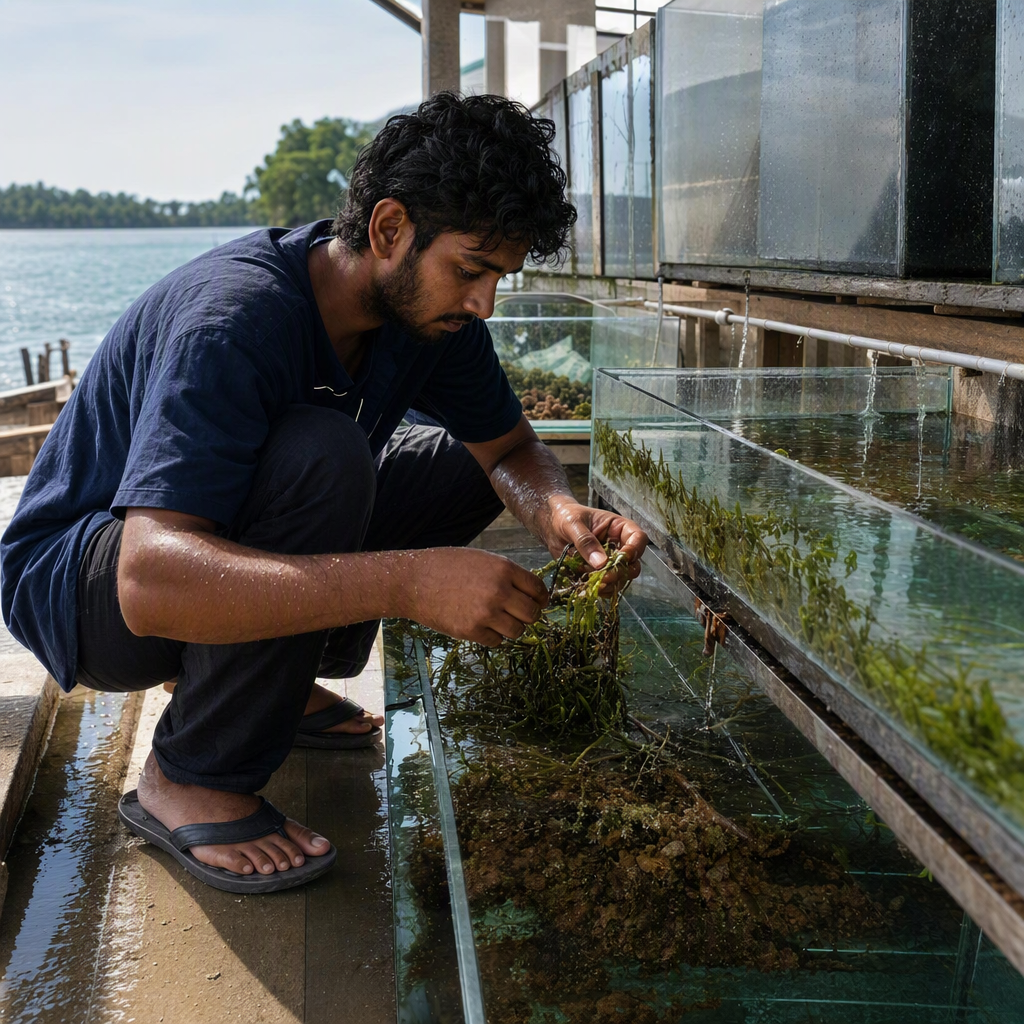
What stays uncertain
Sediment can be mixed by roots, burrowing animals, erosion and storms. Carbon found at one depth may have arrived from elsewhere. Dating methods carry ranges rather than perfect timestamps. Comparing sites requires a sampling design broad enough to distinguish local variation from wider patterns.
The responsible conclusion is modest: mangrove sediment can preserve meaningful carbon records, but the size, age and security of those stores must be demonstrated place by place.
Protection before arithmetic
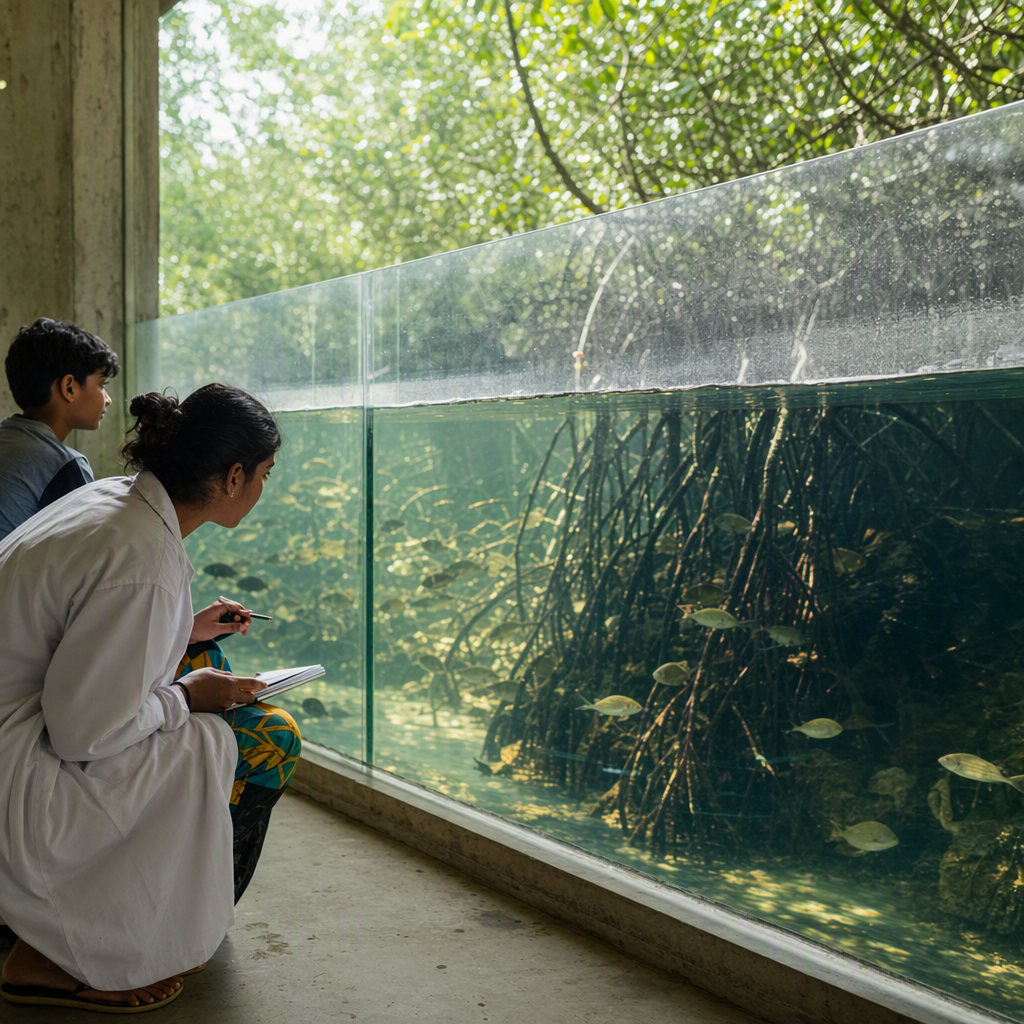
Carbon accounting can make a wetland legible to policy, yet mangroves are more than a ledger. They are nurseries, shore buffers, feeding grounds and lived landscapes. Any conservation proposal must involve the people whose work, safety and histories are connected to that coast.
A number does not confer permission. Good field practice joins measurement to consent, local knowledge and long-term stewardship.