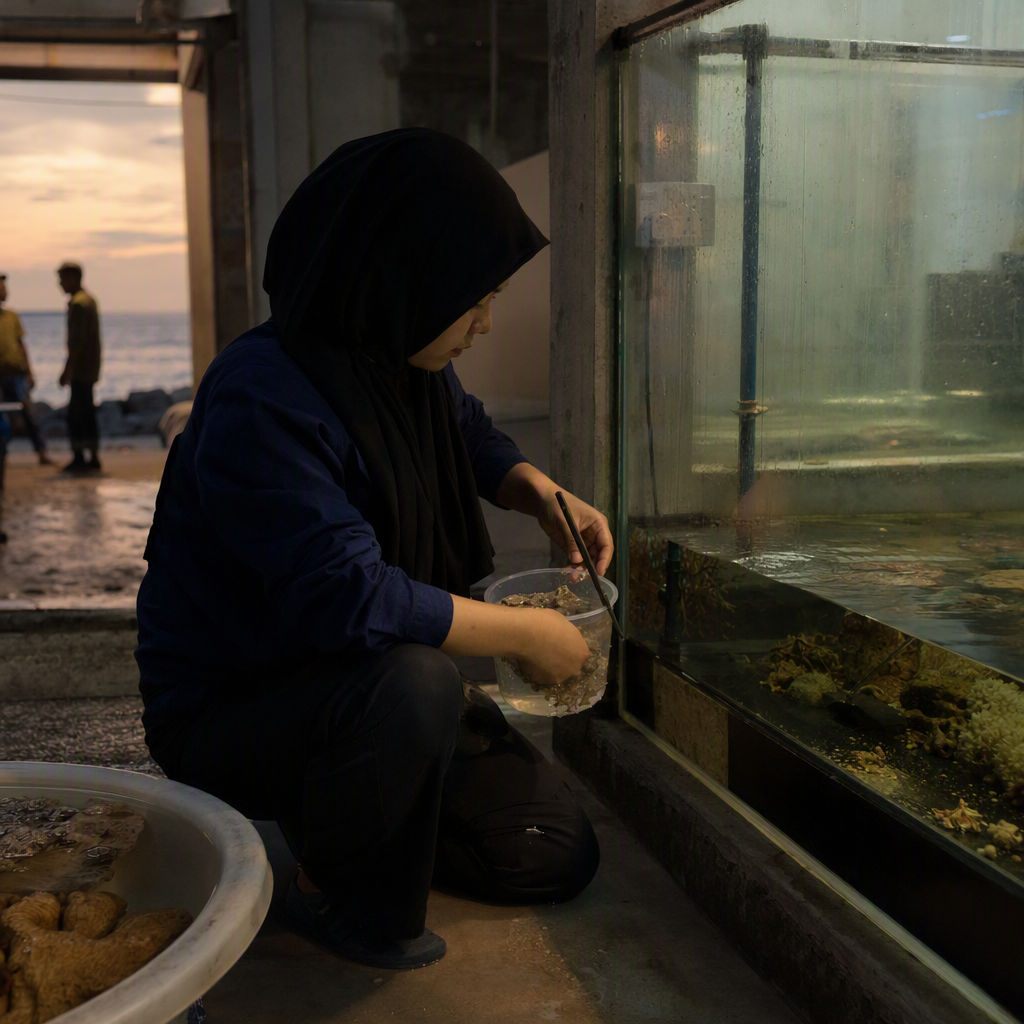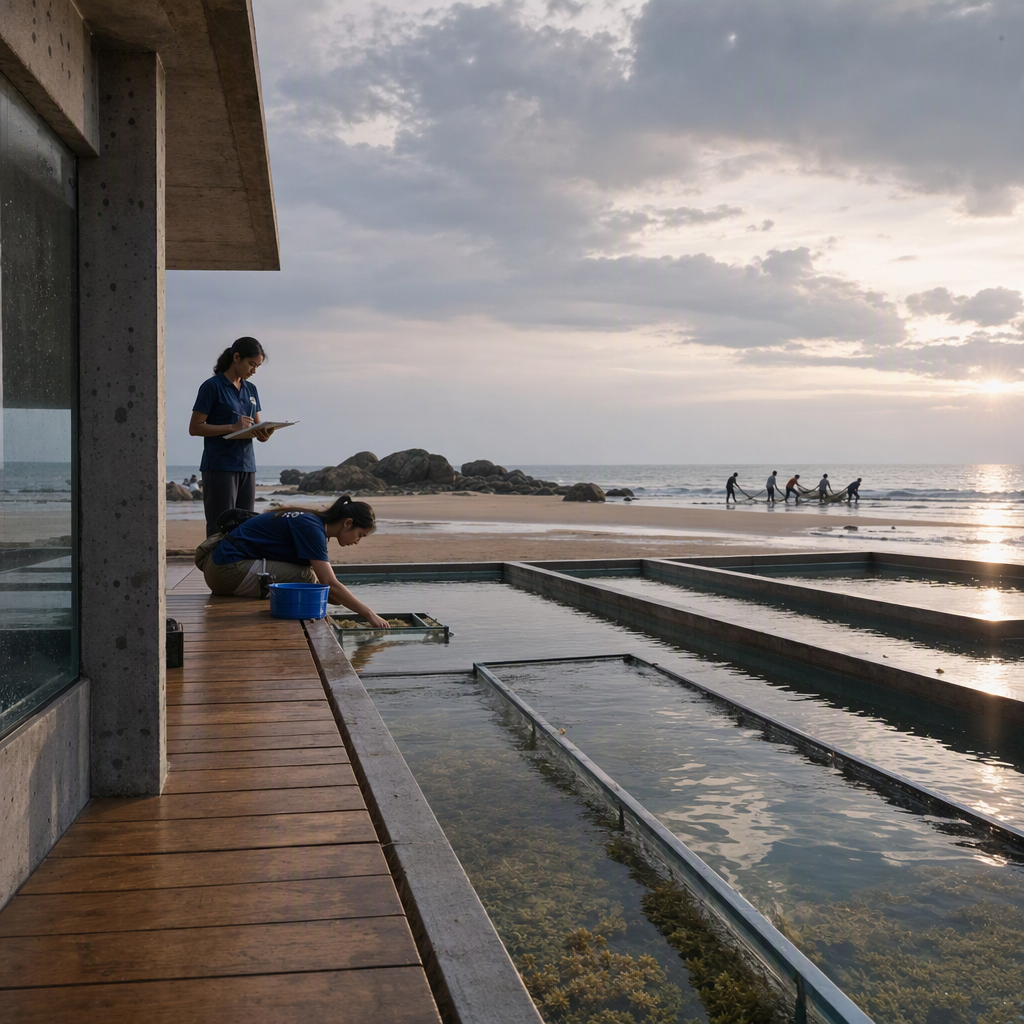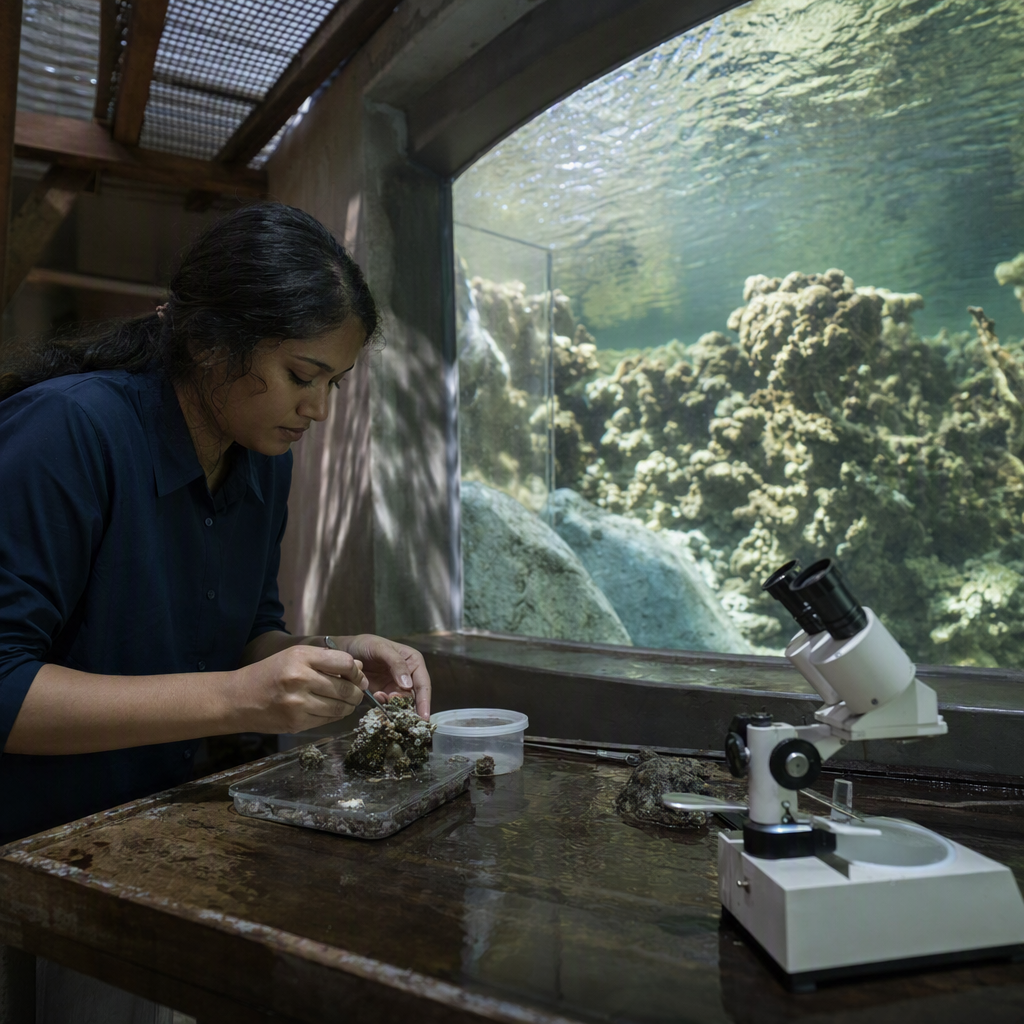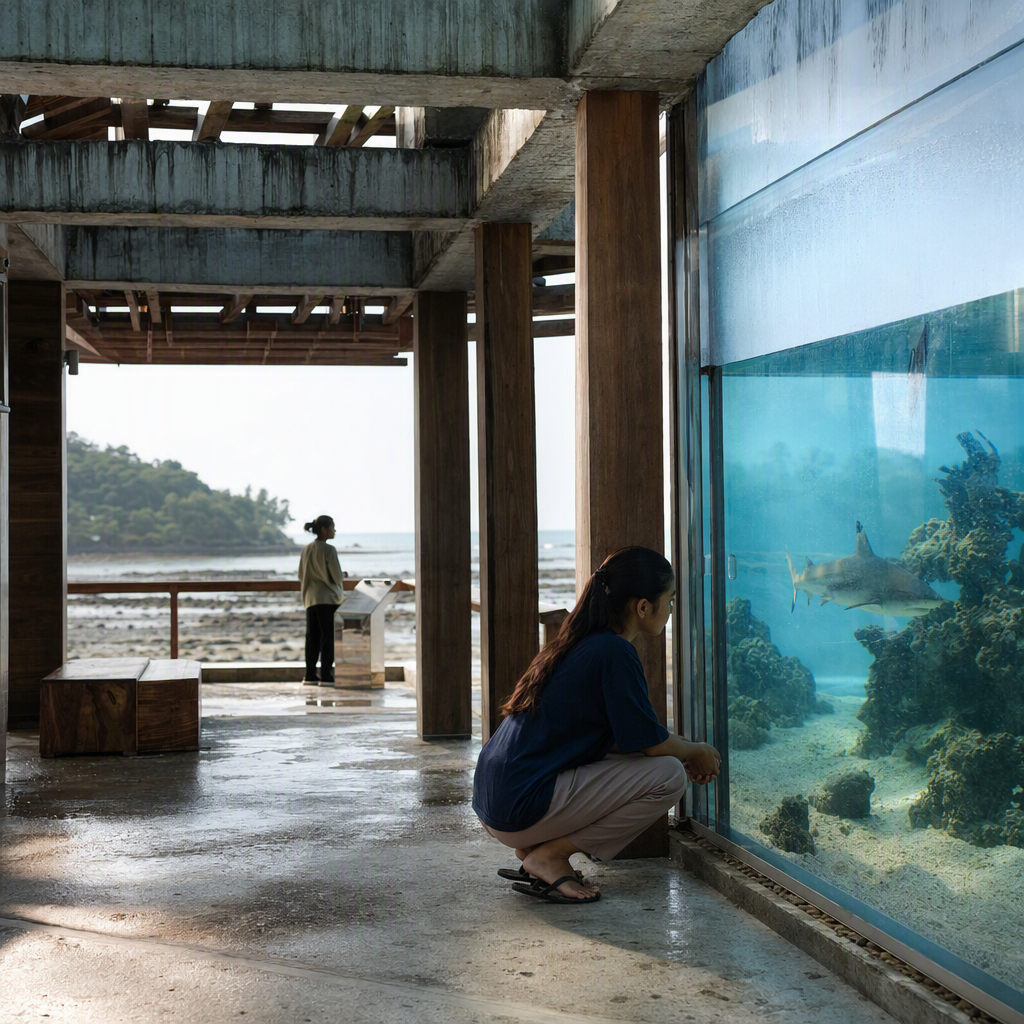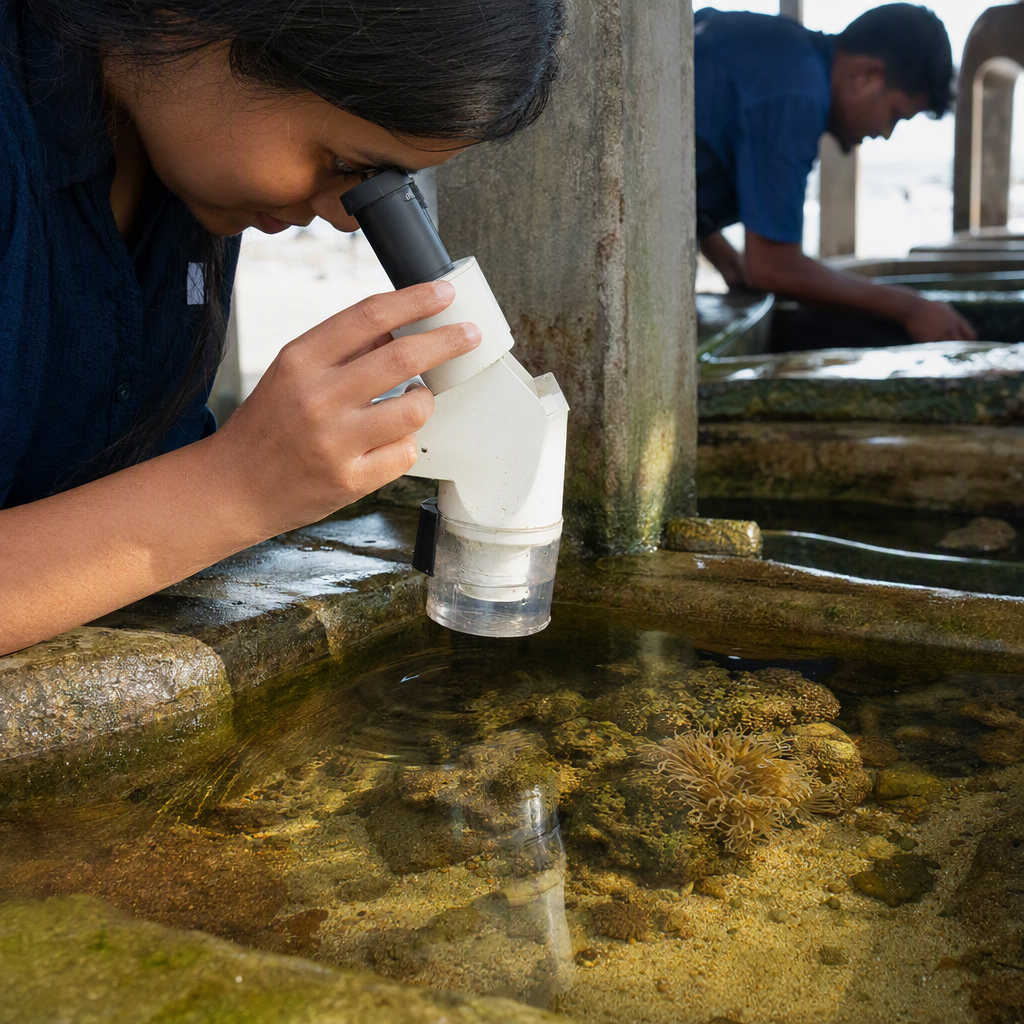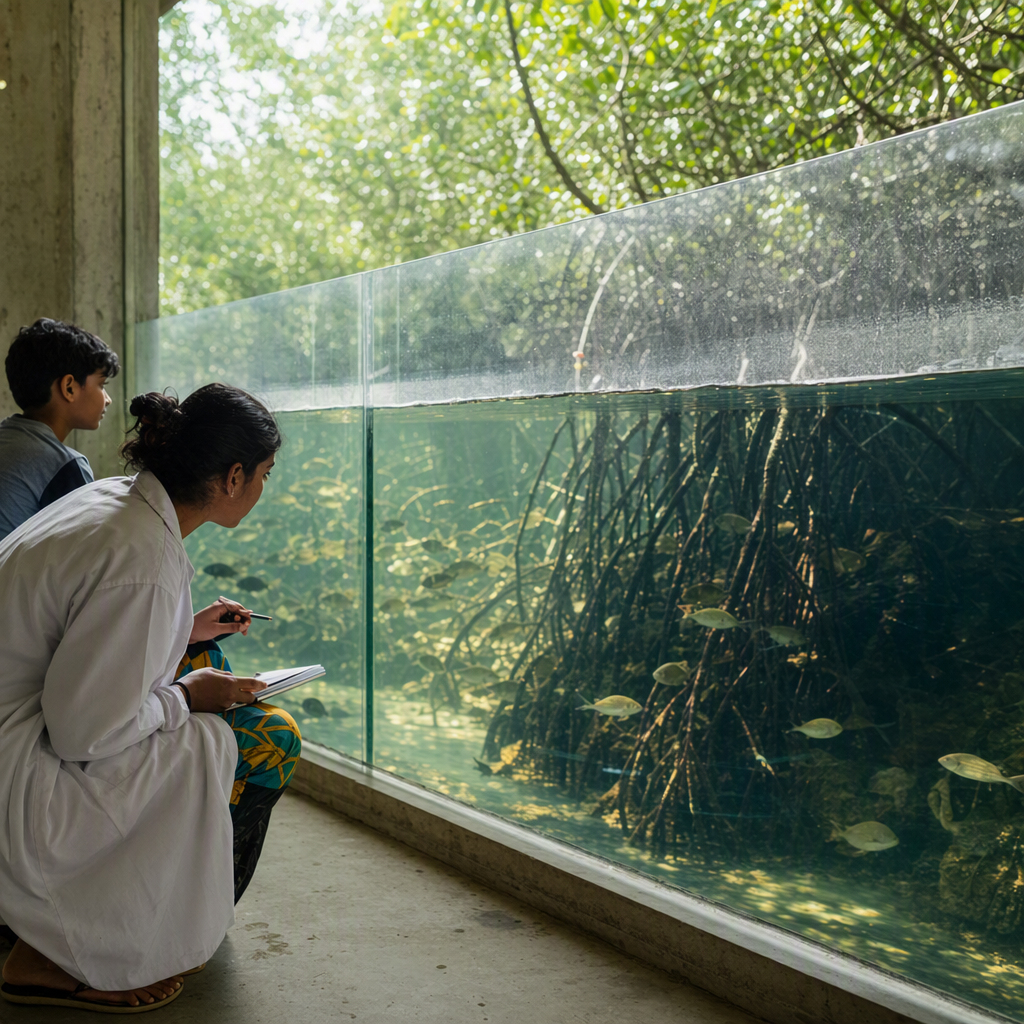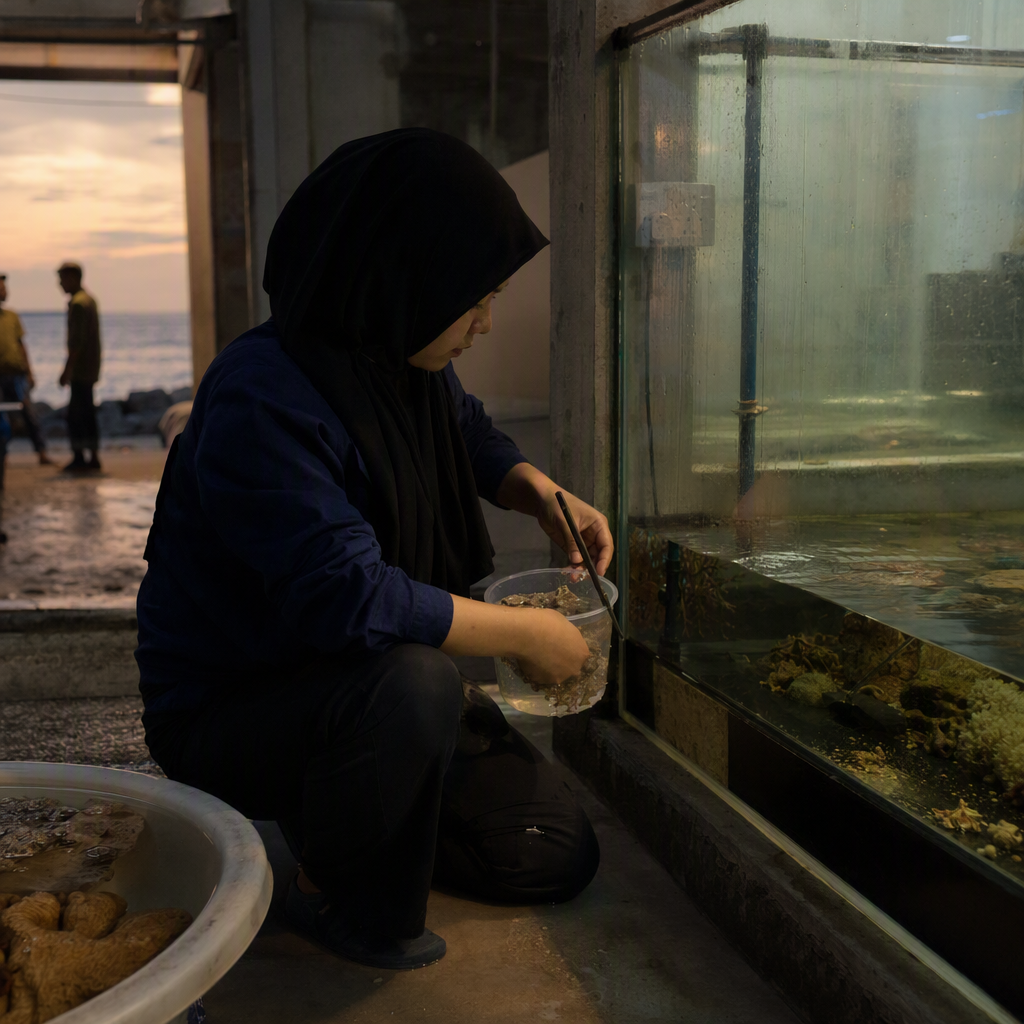
Concept preview Tidehouse is a fictional institution imagined for Cox’s Bazar.

Read the source & fiction note
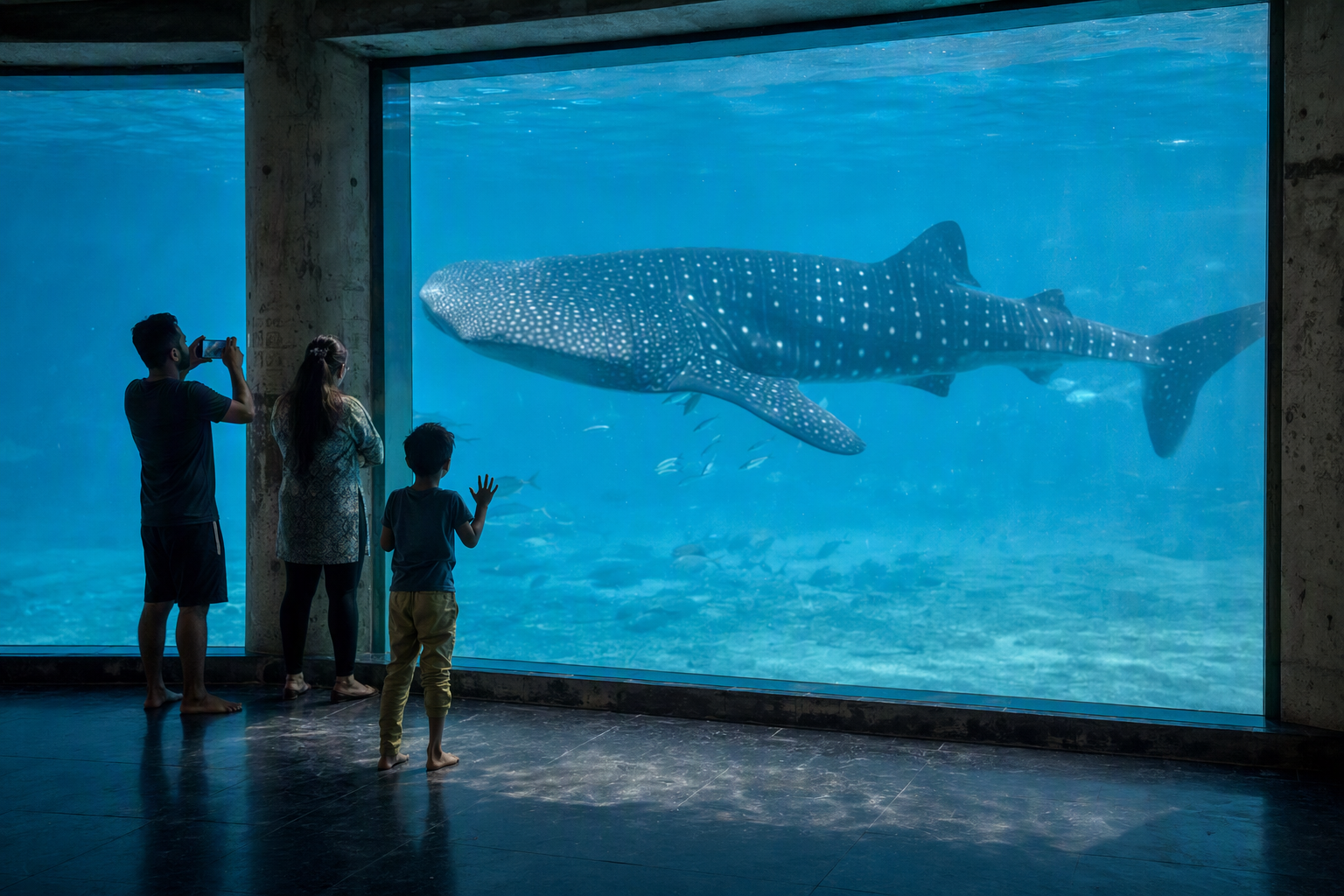
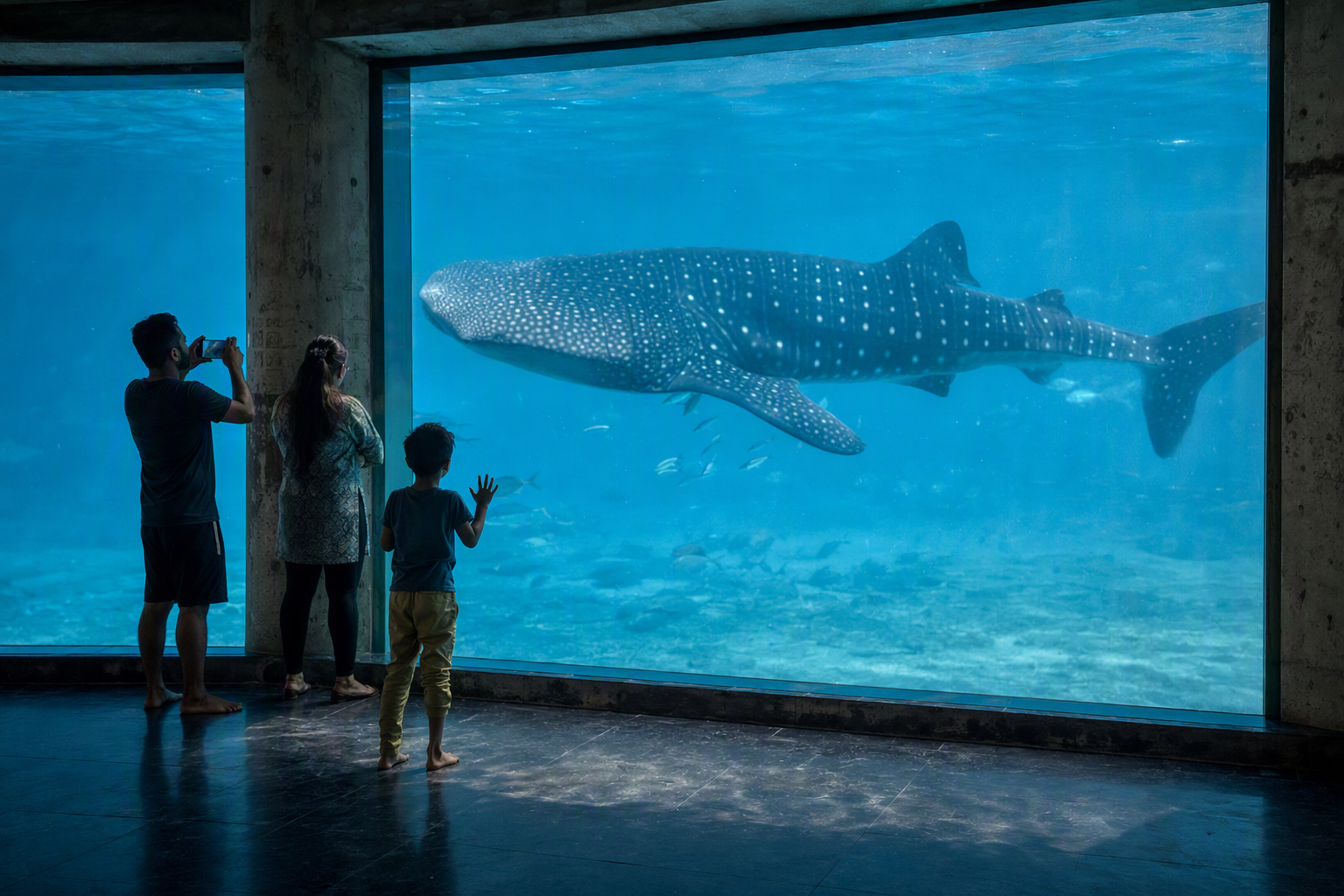
Whale shark moving through clear blue open water above a distant reef slope

Species explorer · illustrative collection

One bay.
Countless lives.

Travel from mangrove margins to open water and meet 18 species that reveal how the Bay of Bengal’s habitats connect.

Reading the collection

Look for relationships, not a checklist.

These records connect animals to broad habitats, depth zones and animal groups. They are not a complete inventory of the Bay of Bengal, and seeing a species here does not imply it could be kept at Tidehouse.

Conservation labels follow broad IUCN Red List categories for orientation. Status can change and regional populations may face pressures that a global category does not fully describe.

  • Critically Endangered
  • Endangered
  • Vulnerable
  • Other assessed categories

Shape your dive

Filter by where and how life moves

Choose one or more characteristics. Results match every active filter group.

Habitat
Animal group
Depth zone
Conservation status

18 species shown

Field guide

Meet the life of the bay

Whale shark swimming below the sunlit ocean surface

Open ocean · surface to 1,900 m

Vulnerable

Whale shark

Rhincodon typus

The world’s largest fish follows blooms of plankton and small schooling prey, filtering water through broad gill plates.

Look for
A unique constellation of pale spots
Connection
Productive fronts and plankton pulses
Green turtle gliding above a shallow seagrass bed

Coast & reef · surface to 40 m

Endangered

Green turtle

Chelonia mydas

Adults graze seagrass and algae, linking feeding grounds to nesting beaches across long migrations.

Look for
A smooth shell and small rounded head
Connection
Healthy seagrass meadows and dark beaches
Irrawaddy dolphin surfacing in calm silty coastal water

Estuary & coast · surface

Endangered

Irrawaddy dolphin

Orcaella brevirostris

A round-headed dolphin associated with shallow coastal, estuarine and river-influenced water.

Look for
A blunt forehead and small dorsal fin
Connection
Quiet channels with abundant fish
Oceanic manta ray passing through blue midwater

Open ocean & reef · surface to 1,000 m

Vulnerable

Oceanic manta ray

Mobula birostris

Broad fins carry this filter-feeding ray between productive offshore waters and seasonal aggregation sites.

Look for
Forward-curled cephalic fins
Connection
Plankton currents and cleaning stations
Hawksbill turtle resting beside branching coral

Reef & coast · surface to 80 m

Critically Endangered

Hawksbill turtle

Eretmochelys imbricata

A narrow beak helps this turtle forage in reef crevices, where it can influence sponge communities.

Look for
Overlapping shell scutes and hooked beak
Connection
Complex reefs and quiet nesting beaches
Bengal guitarfish resting on a sandy seafloor

Coastal seafloor · 5 to 60 m

Critically Endangered

Bengal guitarfish

Rhinobatos annandalei

This flattened ray-like fish spends much of its time close to sand and mud, where camouflage matters.

Look for
A wedge-shaped head and shark-like tail
Connection
Undisturbed soft-bottom habitat
Indo-Pacific tarpon turning in silvery coastal water

Coast & estuary · surface to 50 m

Data Deficient

Indo-Pacific tarpon

Megalops cyprinoides

A reflective, air-breathing fish able to use oxygen-poor lagoons and estuaries as nursery habitat.

Look for
Large silver scales and an upturned mouth
Connection
Connected rivers, lagoons and coastal water
Giant grouper hovering beside a rocky reef ledge

Reef & open water · 5 to 100 m

Vulnerable

Giant grouper

Epinephelus lanceolatus

A massive reef predator whose long life and slow maturation make healthy adult populations hard to replace.

Look for
Dense mottling and a heavy rounded body
Connection
Mature reefs with intact food webs
Spotted seahorse holding seagrass with its curled tail

Seagrass & reef · 1 to 25 m

Vulnerable

Spotted seahorse

Hippocampus kuda

A slow-moving fish that anchors to seagrass, algae and branching habitat with a prehensile tail.

Look for
A coronet above the head
Connection
Sheltered, structurally rich shallows
Mudskipper raised on its fins above wet mangrove mud

Mangrove margin · intertidal

Least Concern

Giant mudskipper

Periophthalmodon schlosseri

At home between water and air, mudskippers use strong fins to cross exposed sediment as the tide retreats.

Look for
High-set eyes and tracks across mud
Connection
Breathing intertidal flats and tidal creeks
Horseshoe crab moving over wet sand in shallow water

Coastal seafloor · intertidal to 40 m

Vulnerable

Tri-spine horseshoe crab

Tachypleus tridentatus

An ancient marine arthropod that depends on linked feeding grounds and undisturbed sandy spawning shores.

Look for
A domed shield and long tail spine
Connection
Tidal flats, beaches and shallow seabeds
Translucent moon jelly drifting through dark blue water

Coast & open water · surface to 200 m

Not Evaluated

Moon jelly

Aurelia species complex

Slow pulses keep this translucent drifter moving while currents do most of the travelling.

Look for
Four petal-like rings in the bell
Connection
Plankton conditions and coastal circulation
Blue-spotted ribbontail ray settled on pale reef sand

Reef seafloor · 1 to 30 m

Least Concern

Blue-spotted ribbontail ray

Taeniura lymma

Electric-blue spots break up the outline of this small ray as it searches sandy reef margins for prey.

Look for
Blue spots and striped tail
Connection
Reef flats with clean sand pockets
Clownfish hovering among the tentacles of a sea anemone

Reef · 1 to 15 m

Least Concern

Clark’s anemonefish

Amphiprion clarkii

A protective mucus layer allows this fish to shelter among stinging anemone tentacles in a close partnership.

Look for
Two white bars and a pale tail
Connection
Healthy host anemones and shallow reefs
Reef octopus changing colour against textured rock

Reef & coast · 1 to 100 m

Not Evaluated

Reef octopus

Octopus cyanea

Skin cells shift colour and texture within moments, supporting camouflage, display and hunting.

Look for
A moving pattern rather than one fixed colour
Connection
Crevices, rubble and abundant small prey
Broadclub cuttlefish hovering above a colourful reef

Reef · 1 to 100 m

Least Concern

Broadclub cuttlefish

Sepia latimanus

Rippling fins and rapidly changing skin patterns let this cephalopod signal, stalk prey and disappear.

Look for
A broad mantle with a continuous fin
Connection
Reef structure and clear hunting water
Mangrove red snapper swimming between submerged roots

Mangrove & reef · 1 to 100 m

Least Concern

Mangrove red snapper

Lutjanus argentimaculatus

Young fish use sheltered estuaries and mangroves before many move toward deeper reef habitat as adults.

Look for
A copper-red body and strong canine teeth
Connection
Unbroken routes from roots to reefs
Tiny bioluminescent plankton glowing in disturbed night water

Surface water · microscopic

Not Evaluated

Bioluminescent dinoflagellates

Dinoflagellate group

Some single-celled plankton flash blue when water moves around them, turning disturbance into a brief signal.

Look for
Pinpricks of blue in moving night water
Connection
Nutrients, temperature and water movement