The first task is restraint
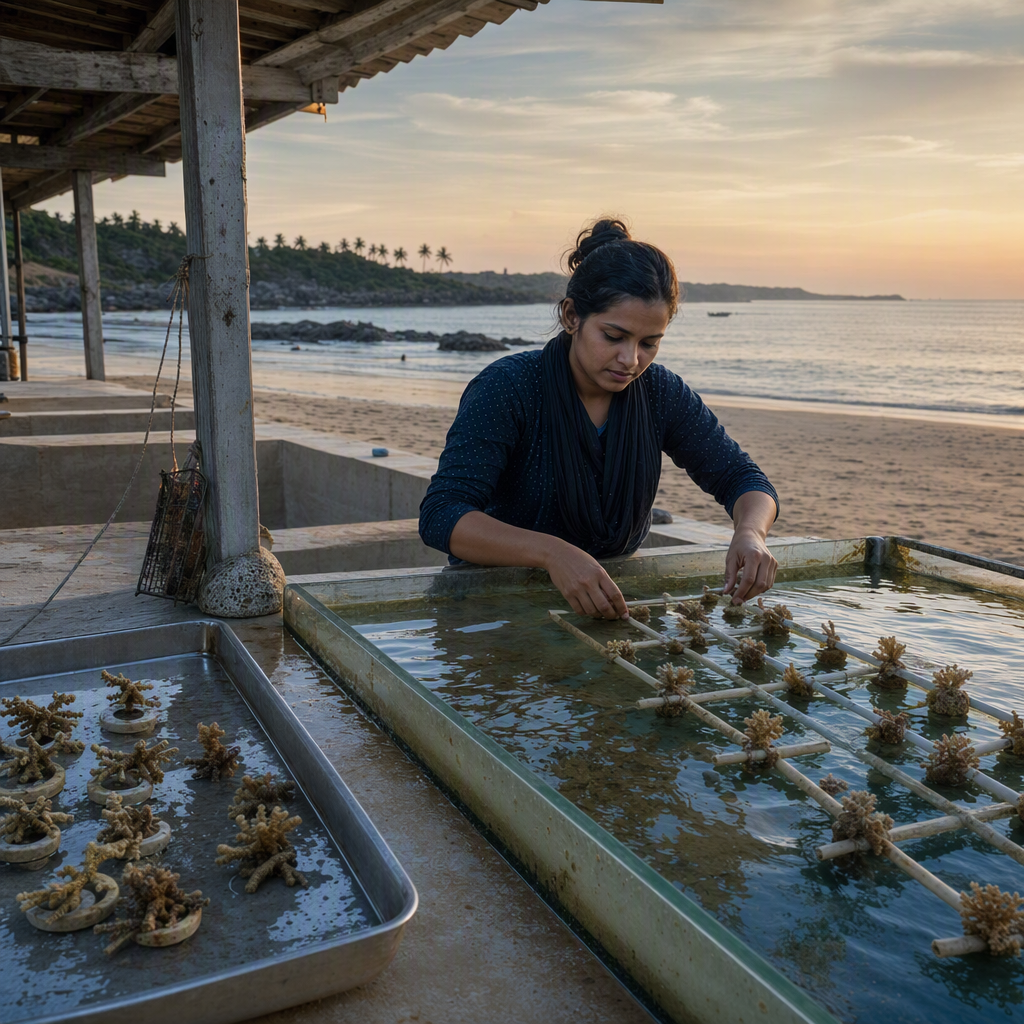
The fictional Tidehouse nursery begins with fragments described as already detached during permitted monitoring, not collected for display. Each receives an identifier that follows it through photographs, health notes and any future decision. Provenance matters because an unlabeled fragment cannot support responsible learning.
A nursery may hold corals temporarily for research, education or restoration trials. It is not automatically conservation success, and captivity is not a replacement for protecting habitat.
“The nursery rewards attentiveness. The reef demands humility.”
Water is the main enclosure
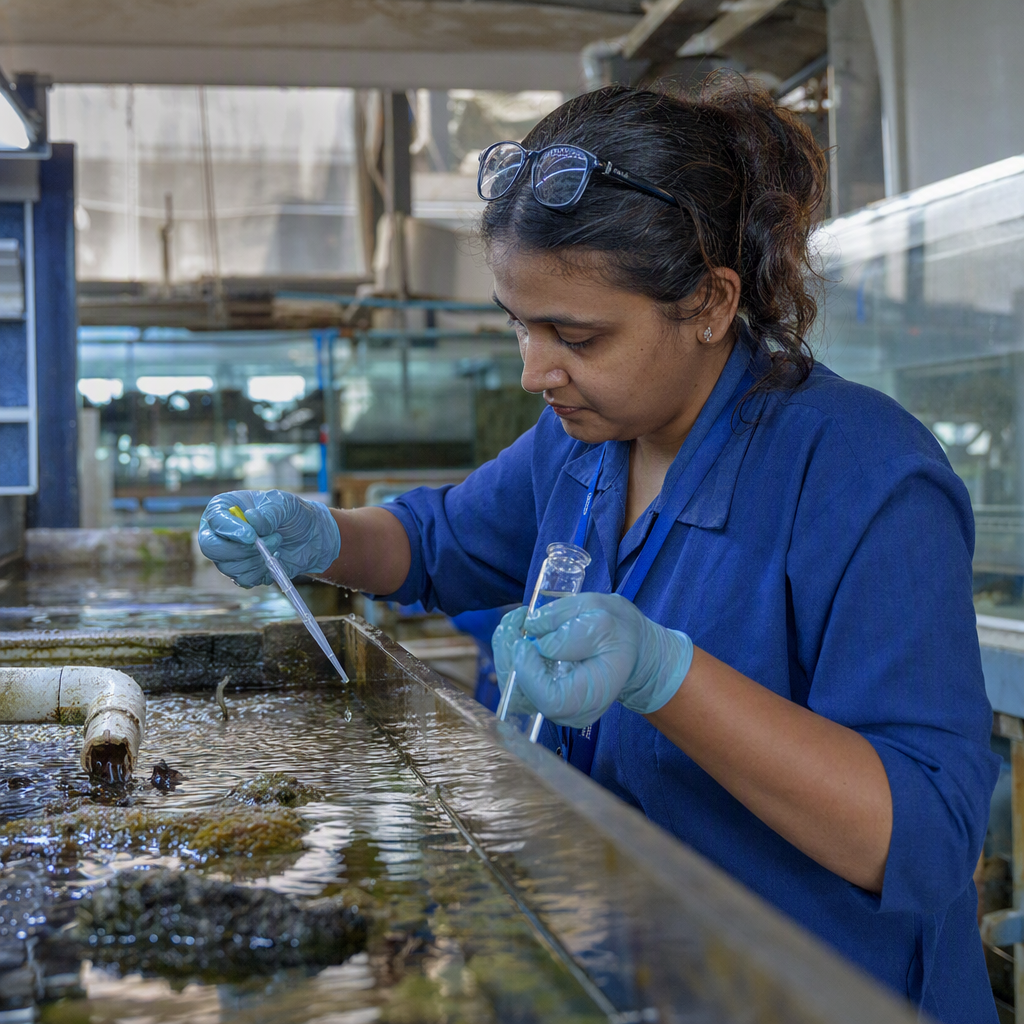
Temperature, salinity, alkalinity, nutrients, flow and light interact. A reading inside range can still conceal a rapid change that stresses an animal. The imagined care team looks for trends, calibrates instruments and compares electronic probes with independent tests.
Polyp extension and colour are useful observations, but neither is a complete diagnosis. Quiet changes in growth or microbial community may precede what a person can see.
Fragmentation carries trade-offs
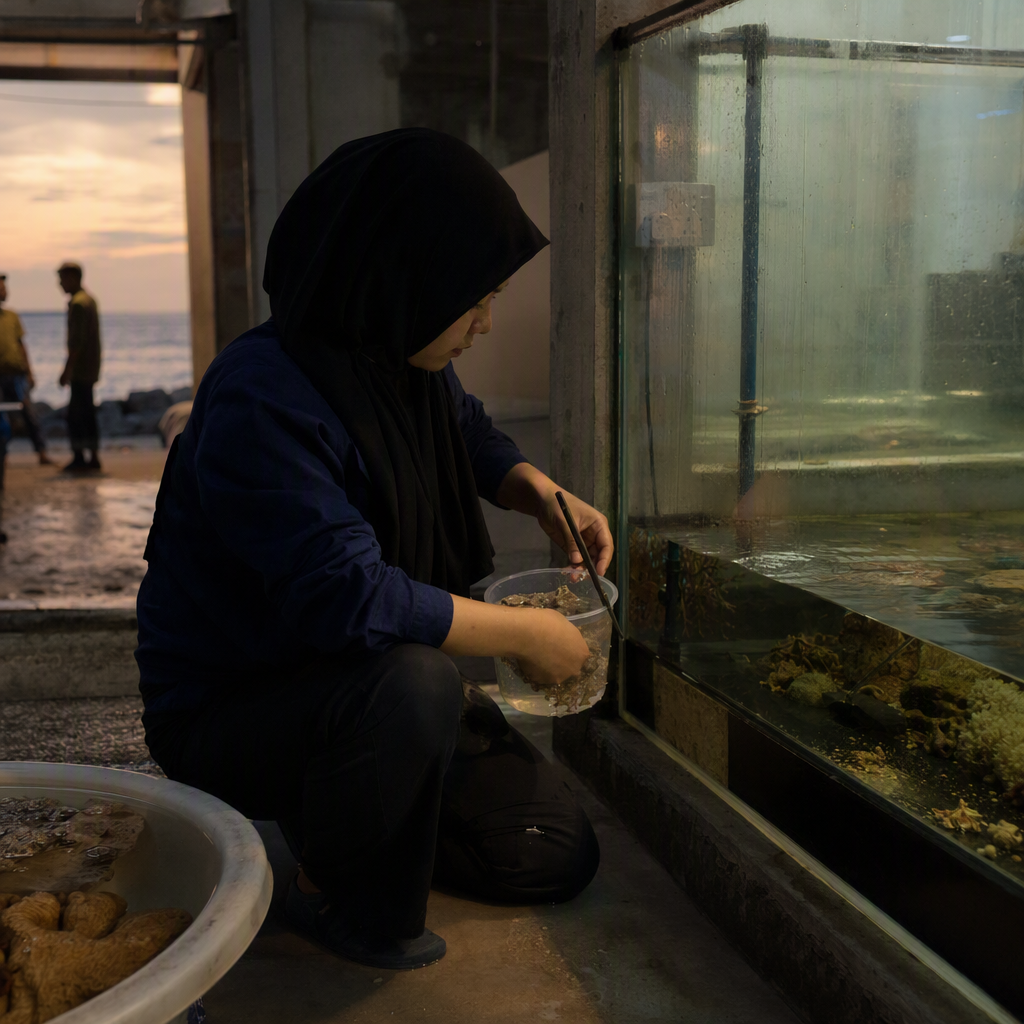
Some coral species naturally reproduce through fragmentation, and small pieces can grow under suitable conditions. Cutting also creates wounds and can narrow genetic diversity if nurseries multiply too few source colonies. Disease can spread through shared systems or tools.
The team’s fictional decision ledger therefore asks not only “Can this fragment grow?” but “What purpose justifies intervention, and what risk travels with it?”
Outplanting is the beginning
Moving nursery-grown coral to a reef exposes it to heat, sediment, competition, predation and wave energy. Survival over months does not guarantee reproduction or ecosystem recovery. Monitoring must be long enough to capture setbacks as well as early growth.
Restoration can contribute locally when it is carefully designed. It cannot offset unchecked warming, destructive development or poor water quality on its own.